Lemon Curd Tartlets
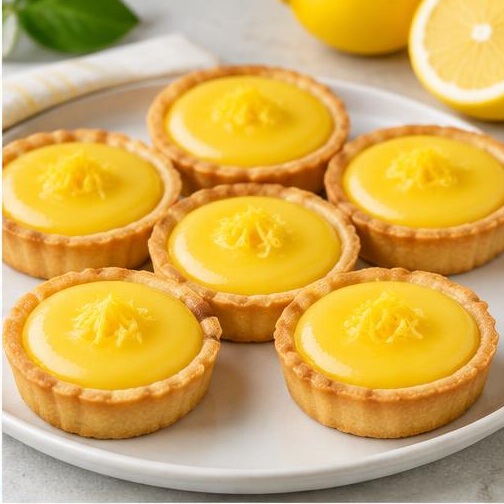
This Lemon Curd Tartlets recipe brings together buttery pastry and a bright lemon filling that tastes especially welcome after Christmas lunch. The small portions suit a hot South African Christmas, when a chilled dessert often appeals more than something rich and warm.
You can make both the shells and the curd ahead, then fill the tartlets on Christmas morning. A standard muffin tin does the job, so there is no need to buy individual tart tins. Keep the pastry shallow for a good balance of crisp shell and soft filling.
The curd needs gentle heat and a little patience. Stir steadily, watch for it to thicken, and let it cool before spooning it into the baked shells.
Ingredients
Sweet shortcrust pastry
Lemon curd
Instructions
Make and bake the pastry shells
- 1Mix the cake flour, icing sugar and salt in a bowl. Rub in the cold butter with your fingertips until the mixture resembles fine breadcrumbs. Stir in the egg yolk and 30 ml cold water, adding the remaining water only if needed to bring the dough together. Do not knead.
- 2Flatten the dough into a disc, cover and refrigerate for 30 minutes. Lightly grease a standard 12-hole muffin tin. Heat the oven to 180°C, or 160°C fan.
- 3Roll the pastry on a lightly floured surface to about 3 mm thick. Cut out twelve 10 cm circles, gently rerolling the scraps as needed. Ease them into the muffin holes without stretching, making shallow shells about 2–2.5 cm deep. Refrigerate for 20 minutes.
- 4Line each shell with a small piece of crumpled baking paper and fill with baking beans or dried beans. Bake for 15 minutes, then carefully remove the paper and beans. Bake for another 7–10 minutes, until the bases look dry and the edges are lightly golden. Cool in the tin for 10 minutes, then gently lift onto a wire rack to cool completely.
Cook the curd and assemble
- 1While the shells cool, whisk the eggs, extra yolks and caster sugar together in a heatproof bowl until evenly combined. Whisk in the lemon juice and zest.
- 2Set the bowl over a saucepan of gently simmering water, making sure the bowl does not touch the water. Stir constantly with a silicone spatula, scraping the base and sides, for 10–15 minutes or until the curd thickly coats the spatula. If using a thermometer, aim for 82–84°C. Do not let the curd boil.
- 3Remove the bowl from the heat and stir in the butter a few cubes at a time until melted. Press the curd through a fine sieve into a clean shallow bowl. Cover the surface directly with clingfilm, allow to cool for about 20 minutes, then refrigerate until cold, about 1 hour.
- 4Divide the cold curd between the cooled pastry shells, allowing roughly 40–45 ml per shell and stopping just below the rims. Refrigerate for at least 1 hour to firm up. Finish with a little fresh lemon zest and serve chilled.
Nutrition (per serving)
- Calories
- 300 kcal
- Carbohydrates
- 34 g
- Protein
- 4.4 g
- Fat
- 16.1 g
- Saturated fat
- 9.4 g
- Sugar
- 17.8 g
- Fibre
- 0.6 g
- Sodium
- 50 mg
- Cholesterol
- 128 mg
Estimated values based on the ingredients used.
Notes
Christmas tips
- For easy Christmas-morning assembly, bake the shells the day before and keep them in an airtight container at cool room temperature. Refrigerate the curd separately in a covered container.
- Fill the shells on the day you plan to serve them for the crispest pastry. Keep the filled tartlets covered in the fridge until dessert time.
- For an outdoor lunch, bring out small batches rather than leaving the whole platter in the heat. Refrigerate within 2 hours, or within 1 hour if the temperature is above 32°C.
- Allow about 3½–4 hours from starting to serving, including chilling and cooling. The listed preparation and cooking times exclude those waits.
Frequently asked questions
Can I use bought pastry?
Yes. Use about 500 g sweet shortcrust pastry, roll it to 3 mm thick and line the tin as described. Follow its packet temperature guidance and blind-bake until the shells are cooked through.
Why is my lemon curd still runny?
Warm curd is softer than chilled curd, but it should already coat a spatula thickly before leaving the heat. If it is still thin while cooking, continue stirring over gentle heat. Refrigeration firms properly cooked curd; it will not fix curd that has not thickened during cooking.
How long do the tartlets keep?
Keep filled tartlets covered in the fridge for up to 3 days. They are best on the first day because the pastry gradually softens. Do not store them at room temperature.