Rich Roast Gravy
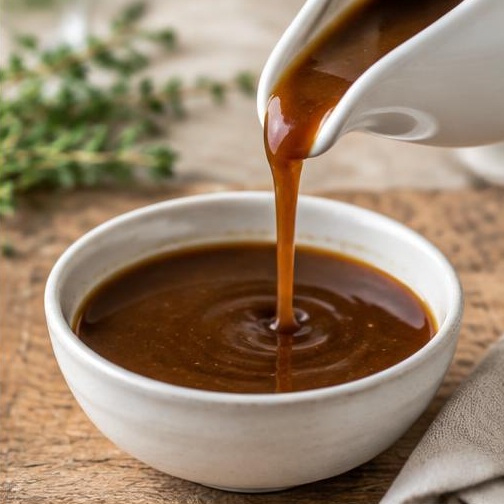
This Rich Roast Gravy recipe turns the browned bits in your roasting tin into a proper sauce for Christmas lunch. It works with beef, lamb, chicken or turkey drippings, so you can use whichever roast your family enjoys. The trick is to keep the flavourful juices, measure the fat and leave any burnt bits behind.
On a hot South African Christmas day, a little warm gravy brings the roast together without needing another heavy side dish. Serve it separately so everyone can help themselves, especially if salads share the table with roast potatoes. Make it while the meat rests, and keep a little extra stock nearby: gravy thickens as it stands, and a splash loosens it nicely.
Ingredients
Instructions
- 1Once your roast is cooked, transfer it to a platter to rest. Pour the roasting tin contents into a heatproof jug and let the fat rise for a few minutes. Reserve 30 ml of the fat, then skim the remaining fat off the juices.
- 2Measure 100 ml of the skimmed juices, topping up with stock if necessary. Keep this separate from the measured 500 ml stock. Leave blackened or burnt deposits in the tin, as they will make the gravy bitter.
- 3Pour about 150 ml of the measured stock into the warm roasting tin. Scrape up the golden-brown deposits with a wooden spoon. If the tin is hob-safe, warm it gently on the hob; do not put glass or ceramic roasting dishes over direct heat. Reserve this liquid.
- 4Heat the reserved fat or butter in a medium saucepan over medium-low heat. Stir in the flour and cook for 3–4 minutes, stirring continuously, until lightly golden and smelling toasted rather than raw.
- 5Whisk in the remaining measured stock a little at a time, making a smooth paste before adding more. Whisk in the liquid from the roasting tin and the measured roast juices.
- 6Add the Worcestershire sauce and thyme. Bring to a gentle simmer, then cook uncovered for 10–12 minutes, stirring frequently, until the gravy lightly coats the back of a spoon.
- 7Remove the thyme sprigs. Taste before adding pepper and any salt, as roast juices can already be salty. If the gravy is too thick, whisk in extra stock, 15 ml at a time; if too thin, simmer for another few minutes.
- 8Strain through a fine sieve into a warmed gravy boat for a smooth finish. Serve promptly with the rested roast. The recipe makes approximately 550–600 ml, depending on how much it reduces.
Nutrition (per serving)
- Calories
- 75 kcal
- Carbohydrates
- 5.5 g
- Protein
- 2 g
- Fat
- 5 g
- Saturated fat
- 2 g
- Sugar
- 0.7 g
- Fibre
- 0.2 g
- Sodium
- 240 mg
- Cholesterol
- 7 mg
Estimated values based on the ingredients used.
Notes
Christmas tips
- Have the flour weighed and the stock measured before the roast comes out of the oven, so the gravy fits neatly into the meat's resting time.
- For a hot South African Christmas lunch, bring out a small gravy boat and keep the rest hot in the kitchen. Refill as needed rather than leaving the whole batch on the table.
- If lunch is delayed, keep the gravy covered over very low heat, at 60°C or above. Stir regularly and thin with a splash of stock if needed.
- Refrigerate leftovers in a shallow container within two hours, or within one hour if the temperature is above 32°C. Use within two days and reheat until bubbling throughout.
Frequently asked questions
Can I make this gravy without roast drippings?
Yes. Use 30 g butter for the fat and replace the roast juices with another 100 ml of good-quality stock. Skip the roasting-tin step and add all 600 ml stock gradually to the cooked flour mixture. The flavour will be milder without the browned roast deposits.
How do I fix lumpy gravy?
Whisk vigorously while it simmers gently. If lumps remain, strain through a fine sieve into a clean saucepan, then simmer again and check the consistency.
Can I make the gravy ahead?
Yes, if you already have cooked roast juices available. Prepare it up to two days ahead, cool promptly and refrigerate. Reheat until bubbling throughout, stirring well and adding a little stock to loosen it. Without drippings, use the stock-only method above.