Articles
Classic melktert recipe with step-by-step photos for a silky custard and crisp pastry
Make a South African milk tart from scratch with this recipe melktert guide—crisp pastry or Tennis biscuit base, silky custard, fixes, and festive serving tips.
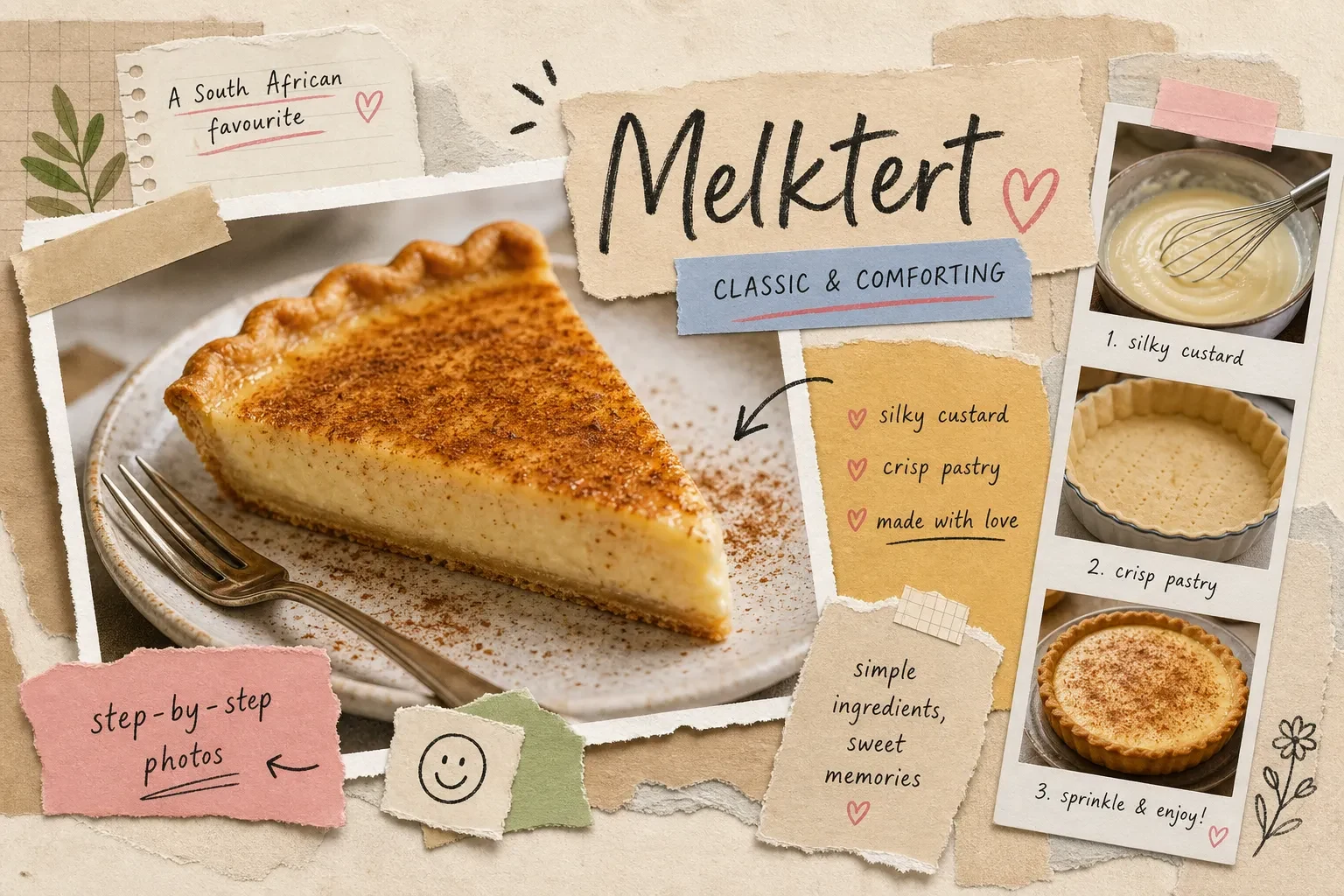
Close your eyes for a second. You're standing in a kitchen that smells of cinnamon and warm milk. There's a white custard tart cooling on the counter, its surface dusted a soft russet gold, and the feeling in the room is unmistakable, Christmas has properly begun. That's melktert. It's a signal.
This recipe melktert guide covers everything you need to make a perfect milk tart from scratch: a properly crisp pastry shell, a silky, well-set custard filling, and a no-bake Tennis biscuit option for those who'd rather skip the oven on a hot December afternoon. Whether you're making it for the first time or rescuing a melktert recipe that's let you down before, you'll leave here knowing exactly which method suits your kitchen and how to nail it.
You'll find the full version of this guide on South African Christmas Recipes, including a printable recipe card, a step-by-step how-to video, and festive pairing ideas all waiting on the site. By the end of this article, baked or unbaked, you'll have a plan.
Why melktert belongs on every South African Christmas table
The custard tart that carries a whole culture in one slice
Melktert's roots stretch back to the Dutch settlers who arrived at the Cape in the 1600s. They brought European custard tart traditions with them and adapted those recipes to local ingredients, particularly the fresh dairy that became a Cape staple. The name itself is Afrikaans: melk means milk and tert means tart. Over centuries of local adaptation, it became something distinctly South African rather than a reproduction of its Dutch predecessors. The cinnamon dusted on top, now a signature, reflects the layered spice influences of the Cape's Indian Ocean trade history.
In December, melktert appears on tables from Cape Town to Limpopo with the quiet certainty of a dish that doesn't need to announce itself. It's cool, creamy, and spiced with just enough cinnamon to feel festive. The first clean slice through that crisp pastry shell is a sensory memory that stays with you, and it's exactly why this tart keeps showing up at South African Christmas tables year after year.
How South African Christmas Recipes brings this tradition into your kitchen
South African Christmas Recipes was built for this exact kind of cooking: nostalgic, occasion-worthy dishes that define a South African December. Alongside this milk tart recipe, the site hosts a printable recipe card and a step-by-step how-to video so you can follow along without flipping between screens. The site's Christmas menu pages also link to drinks, mains, and sides, making it easy to plan a full festive spread in one place rather than piecing it together from scattered sources.
Recipe melktert: what you need to make a classic milk tart
Pastry crust vs Tennis biscuit base: choosing your foundation
For a 22 to 24 cm tart pan, the baked pastry crust uses 125 g butter, half a cup of sugar, 1 egg, 2 cups flour, 1 tsp baking powder, and a pinch of salt. Cream the butter and sugar, work in the egg, then add the flour until a soft dough forms. This base gives you that satisfying snap when the tart is sliced cold from the fridge, and it holds its shape beautifully on a warm Christmas table.
The no-bake alternative is a Tennis biscuit base: roughly 200 to 250 g of finely crushed biscuits combined with about 150 g of melted butter, pressed very firmly into the pan and chilled for at least 30 minutes before filling. The key word there is firmly. A loosely packed base crumbles the moment you try to serve it. Choose the pastry if you want the classic experience; choose the biscuit base if the oven is already full or the day is too hot to bother.
Custard filling ingredients and smart substitutions
The standard filling for one litre of full-cream milk calls for 3 to 6 eggs (3 gives a lighter custard, 6 a richer, more traditional result), about 1 cup of sugar, 4 tablespoons of butter, vanilla, and a starch blend for thickening. A reliable thickener ratio is 3 tablespoons of cornflour plus 1 to 2 tablespoons of cake flour per litre of milk. This combination gives a custard that slices cleanly without turning stodgy or gluey.
If you're using condensed milk, reduce the added sugar significantly because condensed milk is already sweet and thick. It contributes extra body and a subtle caramel richness that works beautifully in the no-bake version. Cornflour alone thickens more smoothly and gives a glossy, neutral set; plain flour gives a slightly more opaque result and needs roughly twice the quantity to achieve the same thickness, so the blended approach is the most forgiving option for most home cooks.
Step-by-step method for a crisp shell and silky custard
Making and blind-baking the pastry shell
Cream the butter and sugar together until pale, beat in the egg, then sift in the flour, baking powder, and salt. Mix until a soft dough forms and press it evenly into the base and up the sides of a lightly greased tart pan; this dough is too short to roll. Prick the base with a fork, line it with baking paper and dried beans or baking weights, and bake at 180°C for 10 to 12 minutes. Remove the weights and return the shell to the oven for a further 5 minutes until lightly golden. Cool the shell completely before adding the filling, pouring hot custard into a warm shell traps moisture in the pastry before it has a chance to set properly.
Blind-baking is not optional. Pouring hot custard into an unbaked shell produces a raw, doughy base that never fully cooks through, no matter how long the tart stays in the oven.
Step-by-step recipe melktert: cooking the custard without scrambling the eggs
The single most important technique in any melktert recipe is tempering the eggs. Whisk the cornflour and flour into a little cold milk to form a smooth paste, then heat the remaining milk with the sugar until just steaming. Add the starch paste and whisk constantly over medium heat until the mixture visibly thickens. This is your base, and it must be genuinely thick before the eggs go anywhere near it.
Now temper: ladle a little of the hot milk mixture into the beaten eggs while whisking steadily, then pour the egg mixture back into the pot. Continue stirring over low heat for another minute or two, then remove from the heat immediately. Continuing to cook past this point is exactly what causes that grainy, slightly scrambled texture that's so disappointing to cut into.
Baking temperature, timing, and the wobble test
Pour the warm custard into the cooled pastry shell and bake at 180°C for 20 to 25 minutes. You're looking for a surface that is just set at the edges with a noticeable wobble in the centre when you give the tin a gentle shake. Pull the tart from the oven while the centre still moves. It will finish setting as it cools, and that residual carryover is what gives you a smooth, sliceable result rather than a rubbery one.
Cool to room temperature, then refrigerate for at least 4 hours, or overnight if you can manage it. A tart sliced straight from the oven is never a tart; it's a warm puddle with ambitions.
Easy melktert variations worth trying this Christmas
The no-bake fridge melktert for a quick Christmas fix
Press the Tennis biscuit base into the pan and chill it for 30 minutes while you cook the custard on the stovetop. The condensed milk version works especially well here: the extra body means the custard sets more firmly in the fridge without needing an oven. Pour the slightly cooled custard over the chilled base and refrigerate for a minimum of 4 hours. You'll know it's ready when the surface feels set to a gentle touch and no liquid pools at the edges when you tilt the pan slightly.
Rooibos custard, caramelised top, and other variations
For a uniquely South African twist, steep two rooibos teabags in the warm milk for five minutes before straining and using it in the standard custard recipe. The flavour is warm, earthy, and unmistakably local. For a showstopper finish, dust the fully set tart with a thin layer of caster sugar and torch or place briefly under a hot grill until the sugar caramelises to a golden crust. The result looks like a crème brûlée that took a very satisfying South African holiday.
The condensed milk melktert also deserves its own mention: it's simpler, richer, and a little more indulgent, which makes it a brilliant option when the kitchen is already full and time is short. Think of it as the version you make when the day has gotten away from you but you still want something worth cutting into.
Fixing the most common melktert mistakes
Why your custard isn't setting and how to fix it
A runny custard almost always means the starch base was not cooked long enough before the eggs were added. Cornflour needs sustained heat and constant stirring to fully hydrate; if it's whisked into lukewarm milk for two minutes and called done, it will not thicken properly. Cook the milk-starch mixture over medium heat until it is noticeably thick before you temper the eggs. There should be real resistance on the whisk before you move on.
If the tart is already baked and still loose after chilling, return the custard filling to a saucepan with a small cornflour slurry (1 teaspoon cornflour dissolved in 2 tablespoons of cold milk), stir over low heat until thickened, and re-fill the shell. It's a rescue worth attempting before calling the tart a loss.
Soggy base, cracked surface: what actually went wrong
A soggy base is almost always a blind-baking problem. Skipping that step, or pouring the filling into a warm shell, traps moisture in the pastry before it has a chance to set properly. A cracked surface or rubbery filling, on the other hand, points squarely to overbaking. When custard bakes too long, it puffs up, sets too firmly, and cracks as it contracts during cooling.
The fix for both problems comes down to patience and timing: blind-bake the shell, cool it completely before filling, and remove the tart from the oven while the centre still has that slight, reassuring wobble. Get those right and you'll have a melktert worth every minute you spent on it.
Serving your melktert and building a full Christmas menu around it
What to serve alongside your milk tart on a summer Christmas table
Melktert is best served cold, straight from the fridge, which makes it ideal for December in South Africa when the last thing anyone wants is a hot pudding after a braai. Dust the top generously with ground cinnamon just before bringing it to the table; cinnamon absorbs into the surface over time, so dusting ahead of serving keeps it looking fresh and smelling glorious. The tart pairs naturally after a glazed gammon, a roast turkey, or a full braai spread of sosaties, lamb chops, and potato salad.
For something to drink alongside, a Rock Shandy from the South African Christmas Recipes drinks section is a brilliant pairing: it's cold, lightly bitter, and cuts cleanly through the richness of the custard. Browse the site's drinks pages for the full recipe and other festive options to round out the table.
Where to find the printable recipe, video, and full Christmas menu planner
South African Christmas Recipes hosts a printable version of this melktert recipe, including ingredient quantities, the full step-by-step method, and serving notes in a tidy recipe card you can save or print before your shopping trip. The site's how-to video walks through the custard-cooking and tempering steps, which is genuinely useful if you're making melktert for the first time and want to see exactly what "visibly thick" looks like before adding your eggs.
Browse the full festive menu pages on the site to plan every course in one place: drinks, mains, sides, and desserts. The downloadable Christmas menu planner ties it all together so you arrive at Christmas Day with a list, a clear plan, and no last-minute scramble at the shops.
Whether you go with the baked pastry shell or the chilled Tennis biscuit base, the goal is the same: a cinnamon-dusted tart that slices cleanly, tastes creamy and cool, and is unmistakably South African Christmas on a plate. Temper your eggs carefully, pull the tart from the oven while the centre still wobbles, and give it a proper chill before you cut it, and you'll have a recipe melktert worth bringing to any table this December. Head over to South African Christmas Recipes to grab the printable card and build the rest of your festive menu around it.
More articles

How to make the classic rock shandy cocktail for your South African Christmas

7 Festive Gammon Recipes to Centre Your South African Christmas Table

South African Christmas Dinner: A Complete Festive Menu Guide