Christmas Roast Duck with Orange Sauce
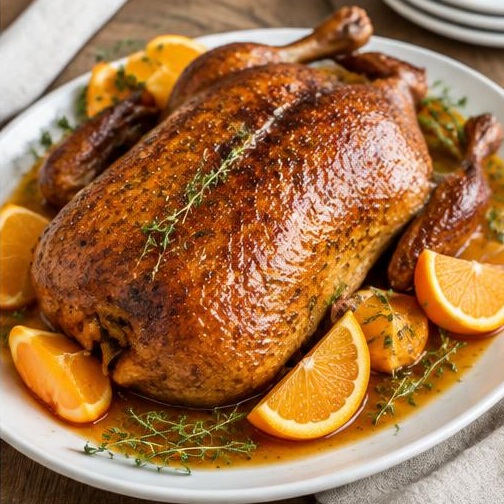
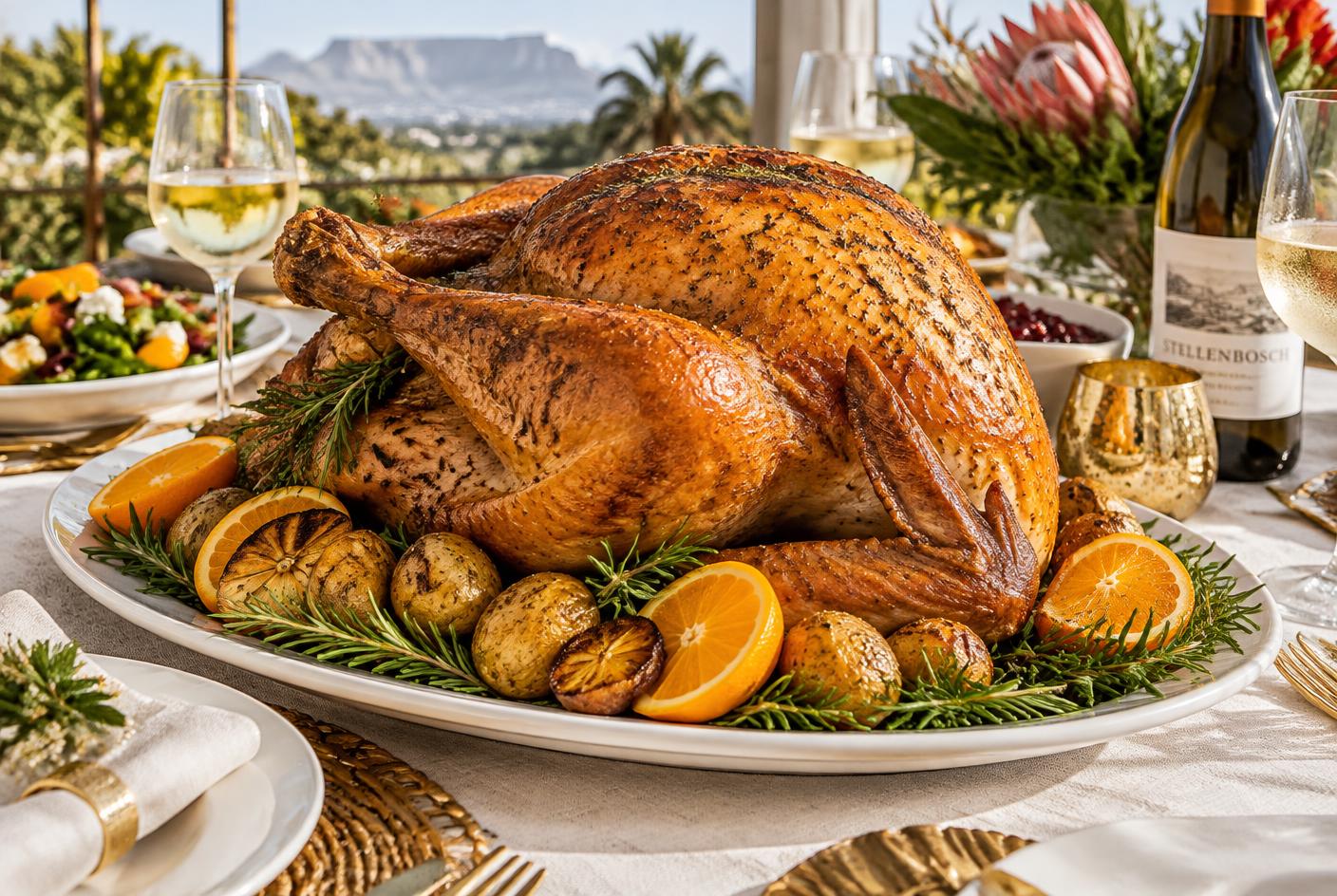
This Christmas Roast Duck with Orange Sauce recipe gives you crisp skin, tender meat and a citrus sauce that cuts through the richness. It suits a hot South African Christmas beautifully: serve modest portions with a crunchy green salad, chilled green beans and a few roast potatoes rather than a table full of heavy sides.
The practical trick is to dry the duck well and roast it on a rack so the fat can drain away. Most of the cooking is hands-off, leaving time to set the table in the shade. Make the orange sauce while the duck rests, then pour it into a warmed jug instead of over the bird, keeping that carefully crisped skin dry until serving.
Ingredients
For the duck
For the orange sauce
Instructions
Roast the duck
- 1Heat the oven to 180°C, or 160°C fan. Set a sturdy rack inside a deep roasting pan. Remove any loose lumps of fat from the duck's cavity and neck opening. Pat the duck thoroughly dry inside and out with kitchen paper; do not rinse it.
- 2Using a skewer, prick the skin over the breast, thighs and around the legs, angling the point shallowly so it pierces the skin and fat without stabbing the meat. Rub the salt and pepper over the skin and lightly inside the cavity.
- 3Place the orange quarters, onion and thyme loosely in the cavity; do not pack them tightly. Tuck the wing tips underneath and place the duck breast-side up on the rack. Pour the 250 ml water into the pan below, without wetting the duck.
- 4Roast for 2 hours 10 minutes. After the first hour, and again if needed, carefully spoon excess rendered fat into a heatproof container, leaving a little liquid in the pan. Add a splash of hot water if the pan threatens to dry out. Avoid basting the skin.
- 5Increase the oven to 220°C, or 200°C fan, and roast for about 20 minutes more, until the skin is deep golden and crisp. Check with a meat thermometer: both the thickest part of the breast and the innermost thigh must reach at least 74°C, without the probe touching bone. If necessary, continue roasting at 180°C until safely cooked; loosely shield any overly dark patches with foil.
- 6Transfer the duck to a carving board and rest for 20 minutes, uncovered or very loosely tented with foil. Discard the cavity aromatics. Keep the rendered fat separate from the sauce.
Make the sauce and serve
- 1While the duck rests, put the orange juice, chicken stock, orange zest, brown sugar and vinegar into a small saucepan. Bring to a gentle boil, then simmer uncovered for 8–10 minutes, until reduced by roughly a quarter.
- 2Mix the cornflour with the 15 ml cold water until smooth. Stir it into the simmering sauce and cook for 1–2 minutes, stirring, until lightly thickened and glossy.
- 3Remove the saucepan from the heat and whisk in the cold butter. Taste before adding salt and pepper; the sauce should be tangy rather than syrupy.
- 4Carve the duck into leg and breast portions, sharing the meat and crisp skin between four plates. Serve promptly with the orange sauce in a warmed jug alongside.
Nutrition (per serving)
- Calories
- 790 kcal
- Carbohydrates
- 15 g
- Protein
- 47 g
- Fat
- 59 g
- Saturated fat
- 21 g
- Sugar
- 12 g
- Fibre
- 0.4 g
- Sodium
- 1120 mg
- Cholesterol
- 190 mg
Estimated values based on the ingredients used.
Notes
Christmas tips
- For drier skin, salt the prepared duck the night before and refrigerate it uncovered on a rack over a tray, on the lowest shelf away from ready-to-eat food. Use the recipe's measured salt, not an additional amount.
- Keep the summer menu light with a cucumber salad and green beans dressed with lemon. Resting time gives you a useful window to finish the sides.
- Strain the rendered duck fat into a clean heatproof container, cool promptly and refrigerate. Use within a week for roast potatoes, or freeze it for later.
- The listed cooking time is a guide for a 2.4 kg duck; allow an extra 20 minutes for resting and some flexibility for your oven. Refrigerate leftovers within two hours, or within one hour if the temperature is above 32°C.
Frequently asked questions
Can I make the orange sauce ahead?
Yes. Make it up to two days ahead, stopping before adding the butter. Cool promptly and refrigerate in a covered container. Reheat until bubbling, loosen with a little water if needed, then remove from the heat and whisk in the butter.
How do I thaw a frozen duck safely?
Thaw it in the fridge on a deep tray, keeping it wrapped and separate from other food. A bird this size may need 24–48 hours or longer; follow the packaging guidance and check that the cavity contains no ice before cooking. Never thaw it on the kitchen counter.
Why is my duck skin not crisp?
Damp skin, a crowded roasting pan or sitting in rendered fat can prevent crisping. Dry the bird thoroughly, use a rack and drain excess fat carefully. The hotter final roasting stage helps, but keep an eye on the colour and serve the sauce separately.